Pakhlavan Mahmoud Mausoleum
The most sacred building in Khiva — burial place of the legendary 13th-century wrestler-poet revered as the patron saint of the city.
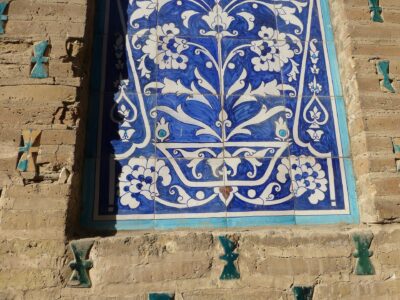
The Pakhlavan Mahmoud mausoleum, built in 1810 in its current form, is the spiritual heart of Khiva. Pakhlavan Mahmoud (1247–1326) was a furrier-turned-poet-turned-champion-wrestler who became revered after death as the patron saint of the city. The complex includes his tomb, several Khans’ tombs, a richly tiled domed mausoleum and an underground holy spring. The interior is one of the most beautiful examples of Khiva’s signature blue-and-white majolica tile work, with verses from Pakhlavan Mahmoud’s own poetry incorporated into the geometric patterns. Local belief holds that drinking from the spring three times grants three wishes; many visitors are pilgrims rather than tourists. The mausoleum’s elegantly proportioned turquoise dome — visible from across Itchan-Kala — has become one of the most recognisable images of Khiva and Uzbekistan as a whole.