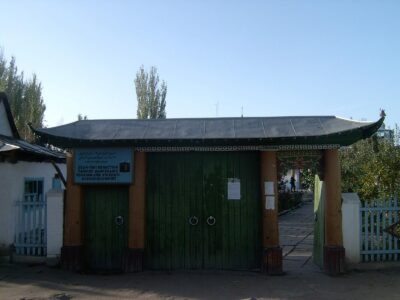
Dungan Mosque (Karakol)
An entirely wooden 1907 mosque built without nails by Dungan (Hui) Muslim craftsmen, with the silhouette of a Chinese Buddhist temple.
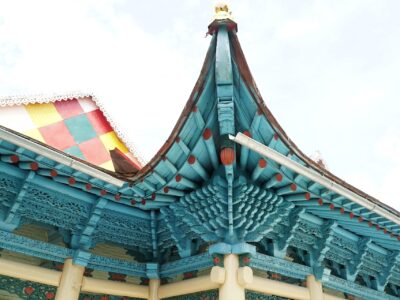
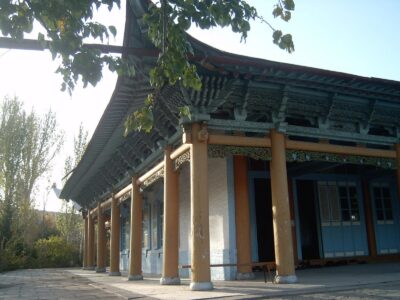
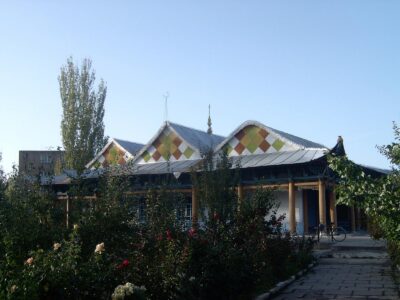
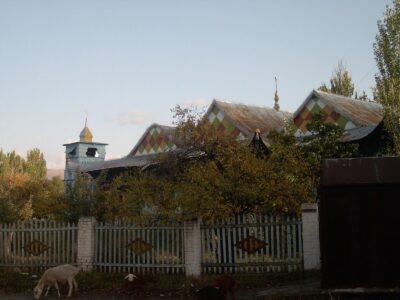
The Dungan Mosque is one of the most architecturally curious religious buildings in Central Asia — a fully functioning Sunni mosque that looks at first glance like a Chinese Buddhist pagoda. Built between 1904 and 1907 by Dungan craftsmen led by master architect Zhou Si and a team of 20 carpenters from northwestern China, the mosque was commissioned by the Dungan (Chinese Hui Muslim) community of Karakol who had fled the Qing crackdown on Hui Muslims in the 1870s. The entire structure was assembled without a single nail, using mortise-and-tenon joinery throughout — pillars, walls and the elaborate multi-tiered roof of green and red painted timbers held together by tension and skill alone. The roof’s swooping eaves, decorated with carved wooden friezes of grapes, peaches, pomegranates and dragons (yes, dragons — a remarkable concession to Chinese aesthetic conventions in an Islamic building), give the mosque its pagoda-like silhouette. The interior remains in active use for Friday prayers. The Dungan community of Karakol is small but visible — Dungan-style spicy cuisine (lagman, ashlyan-fu noodles) is one of the city’s distinctive food traditions and best sampled at the small ashlyan-fu stalls behind the bazaar.