Przhevalsky Memorial Museum
Memorial complex 9 km outside Karakol commemorating the 19th-century Russian explorer Nikolai Przhevalsky, with his tomb overlooking Issyk-Kul.
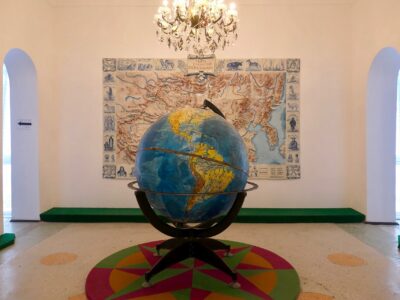
The Przhevalsky Memorial Museum, 9 km north of Karakol on a wooded hillside overlooking Issyk-Kul Lake, commemorates the Russian explorer Nikolai Przhevalsky (1839–1888) — one of the most significant Central Asian explorers of the 19th century. Przhevalsky led four expeditions through Mongolia, the Gobi, Tibet and the Tian Shan between 1870 and 1885; he is best remembered today as the discoverer of the only surviving species of true wild horse (Equus ferus przewalskii — the Przewalski’s horse) and several other large mammals new to Western science. He died in Karakol in 1888 of typhoid fever while preparing his fifth expedition; on his deathbed he asked to be buried on the shore of Issyk-Kul in his explorer’s uniform. The memorial includes his tomb (a 9-metre-high cliff-like granite monument with a bronze eagle holding an olive branch), a small museum displaying his collected specimens, maps and field equipment, and a botanical garden of plants from his expeditions. The museum was renamed Przhevalsk in his honour during Soviet times — a name reverted to Karakol in 1991. The view from the tomb out over Issyk-Kul is one of the finest in the region.